Release the Data

UN Agenda 2030

INTRODUCTION

While in principle non-binding and voluntary, it is arguable that no Agenda has more influence on New Zealand Law and Policy than the United Nations Agenda for the 21st century (UN Agenda 2030). 

The Sales Pitch
Risks of Agenda 2030
Sounds good but...

The Sales Pitch for UN Agenda 2030

UN Agenda 2030 is said to be a wide-ranging, voluntary programme of action that encourages nations to build capacity to collect and use environmental and socioeconomic information relevant to sustainable development.

The 3 pillars of UN Agenda 2030 are Economy, Ecology, and Equity.

It stops short of (and contains no text that requires) a global registry of individual people or of every single manufactured object. The emphasis is on national inventories and monitoring systems for natural resources and environmental pressures (forests, water, biodiversity, land degradation, chemicals, wastes, energy flows), development of indicators and better information sharing — not centralised global “control” of all persons and things. Click the following for Sustainable Development information

The risks arise not from the document itself, but from:

  • How governments operationalise those principles

  • What trade-offs they prioritise

  • How much discretion is removed from individuals and communities in the name of “management”

In other words, the danger is not sustainability per se, but technocratic overreach.

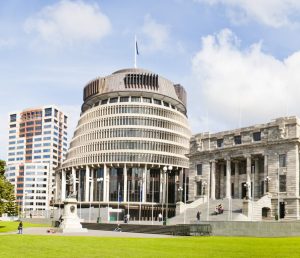
Beehive NZ Parliament


Bottom line

The 17 Sustainability goals sound great... 'No poverty', 'No hunger', 'Good health' & 'Quality Education' among them. But look deeper and some of these things start to look like subversions as opposed to solutions.

Agenda 2030, on the surface, reflects a legitimate, commonsense concern: finite resources and ecological limits.
But how governments respond to that concern can either strengthen or erode freedom, resilience, and human dignity.

The real question is not:

“Is sustainability good or bad?”

It’s:

“Can we protect nature without treating people as problems to be managed?”

New Zealand's involvement in UN Agenda of the 21st Century (UN Agenda 2030)

New Zealand was one of 178 countries to adopt the United Nations’s UN’s Agenda 21 at the Rio Earth Summit in June 1992.

The most prominent New Zealand politician associated with Rio/Agenda-21 and the push for sustainable development policy at the time was National Party member Simon Upton, who was the Minister for the Environment and heavily involved in promoting it. Jim Bolger was Prime Minister at the time but Upton led the UN Agenda 21 drive. 

Is UN Agenda 2030 the control of everything?
  • The ideal answer is ‘No’. Agenda 21 is officially a wide-ranging, voluntary programme of action that encourages nations to build capacity to collect and use environmental and socioeconomic information relevant to sustainable development. It stops short of (and contains no text that requires) a global registry of individual people or of every single manufactured object. The emphasis is on national inventories and monitoring systems for natural resources and environmental pressures (forests, water, biodiversity, land degradation, chemicals, wastes, energy flows), development of indicators and better information sharing — not centralised global “control” of all persons and things.

But with that said… there are real trade-offs, risks, and behavioural tensions that can arise when governments translate Agenda-21-style sustainability goals into policy. These don’t mean the agenda is inherently malign, but they do mean implementation matters enormously.

1. Agenda 21 vs. how governments implement it

Agenda 21 itself is:

  • Non-binding

  • Principle-based

  • Explicitly respectful of national sovereignty

  • Framed around “meeting present needs without compromising future generations”

The risks arise not from the document itself, but from:

  • How governments operationalise those principles

  • What trade-offs they prioritise

  • How much discretion is removed from individuals and communities in the name of “management”

In other words, the danger is not sustainability per se, but technocratic overreach.

Digital ID, if adopted, would become a cornerstone to such risks of government operationalising. 

2. Core tensions with human behaviour and freedom

A. Freedom of movement & access to land

To protect ecosystems, governments may:

  • Restrict access to forests, rivers, coastlines

  • Limit hunting, fishing, foraging, or small-scale extraction

  • Create protected zones where traditional or informal use is curtailed

Tension:
Humans evolved as mobile, adaptive foragers and builders, not as permit-based resource users. Policies that convert shared natural spaces into administratively controlled zones can feel deeply alienating, even if ecologically justified.

Risk:
People who rely on informal access (rural, Indigenous, low-income communities) often bear the heaviest burden.


B. Behavioural regulation through incentives and penalties

Sustainability frameworks often rely on:

  • Pricing signals (carbon pricing, water pricing)

  • Usage limits

  • Monitoring and reporting requirements

Tension:
These systems assume people respond rationally to incentives, but humans also respond to:

  • Identity

  • Tradition

  • Autonomy

  • Fairness (or perceived lack of it)

Risk:
If people feel controlled rather than consulted, compliance drops and resentment rises — even if the policy goal is sound.


C. Centralisation of decision-making

Environmental protection often pushes governments toward:

  • Central planning

  • Expert-driven models

  • Data-heavy oversight systems

Tension:
While ecosystems are complex, over-centralisation reduces local knowledge, adaptability, and personal responsibility.

Risk:
Nature becomes something “managed by the state” rather than something people feel custodial responsibility for — paradoxically weakening conservation ethics.


3. Material trade-offs (“added costs”)

Yes — sustainability policies can impose real sacrifices, including:

  • Higher costs for energy, transport, housing, or food

  • Reduced access to cheap materials

  • Slower infrastructure development

  • Constraints on land use and building

These costs are often:

  • Diffuse (paid by many)

  • Unevenly distributed

  • Politically framed as “necessary” rather than openly debated

Key risk:
When sacrifices are framed as moral obligations without democratic consent, they provoke backlash and polarisation.


4. Potential contradictions with human nature

Some genuine tensions include:

Human tendencySustainability constraint
Desire for autonomyRegulation and compliance
Short-term survival focusLong-term abstract planning
Resource opportunismControlled extraction
Local adaptationStandardised rules
Ownership and stewardshipCollective or state control

These aren’t arguments against sustainability — they’re reminders that policy must work with human nature, not against it.


5. The biggest real risk: moral certainty

Perhaps the most serious danger is moral absolutism:

“Because the goal is noble, the means are justified.”

This mindset can:

  • Shut down legitimate dissent

  • Treat concerns about freedom as selfish or ignorant

  • Justify disproportionate control “for the greater good”

History shows that well-intentioned planning becomes dangerous when it stops tolerating disagreement.


6. What tends to work better (and aligns with Agenda 21’s original spirit)

Ironically, the approaches most consistent with Agenda 21’s actual text (but often least used) are:

  • Subsidiarity: decisions made as close to communities as possible

  • Voluntary stewardship, not just enforcement

  • Local ecological knowledge

  • Clear trade-offs explained honestly

  • Preserving room for human improvisation and resilience

Agenda 21 repeatedly emphasises participation, transparency, and local control — but those principles are often diluted in practice.

New Zealand-specific examples where the spirit of Agenda 2030 has been applied

(what’s worked well, and where tensions have emerged)


1. Conservation estate & national parks

What worked well

  • About one-third of New Zealand’s land is protected conservation estate.

  • National parks (Fiordland, Tongariro, Aoraki/Mt Cook) preserve large ecosystems largely intact.

  • Biodiversity protection has been strong compared with many countries.

  • Public access is formally protected in law — a notable achievement.

Why this aligns with human nature:

  • People can still walk, hunt (in some areas), camp, and experience wilderness directly.

  • There’s a strong cultural narrative of kaitiakitanga (guardianship), not just restriction.


Where it becomes problematic

  • Permitting creep: Activities once assumed lawful (gathering firewood, small-scale foraging, informal access) increasingly require permits.

  • Uneven enforcement: Tourists and concessionaires often have easier access than locals.

  • Local disempowerment: Decisions are made centrally by DOC rather than by communities who live alongside the land.

Tension:
Nature is protected — but increasingly managed by administrators, not lived with.


2. Fisheries management (Quota Management System – QMS)

What worked well

  • Introduced in the 1980s, the QMS is internationally praised.

  • Prevented collapse of many fish stocks.

  • Used clear scientific limits and long-term thinking.

  • Recognised Māori fishing rights through quota allocations.

Why this worked:

  • It accepted ecological limits without banning fishing outright.

  • It aligned incentives with sustainability.


What went wrong

  • Quota consolidation: Fishing rights concentrated in large corporate hands.

  • Small-scale fishers squeezed out, despite sustainable practices.

  • Recreational fishers face tighter rules while industrial trawling persists.

  • Ecological health improved, but human access and fairness declined.

Key lesson:
Sustainability achieved — but at the cost of economic freedom and community resilience.


3. Freshwater reforms & Three Waters

What worked well

  • Genuine environmental problem: rivers, lakes, and aquifers were degrading.

  • Recognition that fragmented governance failed water quality.

  • Long-term infrastructure investment is necessary.


Why it triggered backlash

  • Centralisation of control over water assets.

  • Perception (rightly or wrongly) of loss of local democratic accountability.

  • Cultural and spiritual framing of water governance clashed with property expectations.

  • People felt alienated from something fundamental to survival.

Human-nature conflict:
Water isn’t just a “resource” — it’s existential.
When people feel excluded from decisions about it, resistance is visceral.


4. Indigenous stewardship & co-governance

Where it works well

  • Recognition of Māori knowledge and long-term custodianship.

  • Successful examples in river restoration and species protection.

  • Emphasis on intergenerational responsibility aligns strongly with sustainability.


Where tension arises

  • Lack of clarity about accountability and representation.

  • Confusion between partnership, ownership, and governance roles.

  • Some non-Māori communities feel excluded rather than included.

Risk:
If people perceive environmental governance as identity-based rather than place-based, legitimacy erodes — even if outcomes are good.


5. Urban planning, housing & land use

Intended benefits

  • Reduce sprawl

  • Protect productive land

  • Lower emissions

  • Encourage density


Real-world consequences

  • Housing shortages

  • Escalating costs

  • Reduced ability for people to build modest dwellings

  • Increasing compliance burden for small landowners

Deep contradiction:
Protecting land for “future generations” while pricing current generations out of shelter.


6. The recurring pattern (this matters)

Across all these examples, a consistent dynamic appears:

  1. Legitimate ecological concern

  2. Centralised, expert-driven response

  3. Reduced human autonomy

  4. Uneven burdens

  5. Erosion of trust

This is not a conspiracy — it’s a structural tendency of modern governance.


What New Zealand has shown us

New Zealand demonstrates that:

  • Sustainability can work when:

    • People retain access

    • Rules are simple

    • Stewardship is cultural, not bureaucratic

    • Trade-offs are openly acknowledged

  • Sustainability fails socially when:

    • People feel managed rather than trusted

    • Local knowledge is sidelined

    • Sacrifices are moralised rather than debated

    • Control replaces responsibility


A useful framing (not ideological)

A healthy sustainability model answers all three:

  1. Does this protect the ecosystem?

  2. Does it preserve human dignity and agency?

  3. Does it strengthen local resilience?

If any one of those fails, backlash is predictable — and often justified.


Closing thought

New Zealand’s experience suggests the real danger is not environmental concern, but forgetting that humans are part of the ecosystem — not external threats to be managed away.

Bottom line

Bottom line

Agenda 21 reflects a legitimate, commonsense concern: finite resources and ecological limits.
But how governments respond to that concern can either strengthen or erode freedom, resilience, and human dignity.

The real question is not:

“Is sustainability good or bad?”

It’s:

“Can we protect nature without treating people as problems to be managed?”