
Is roadside drug testing lawful?
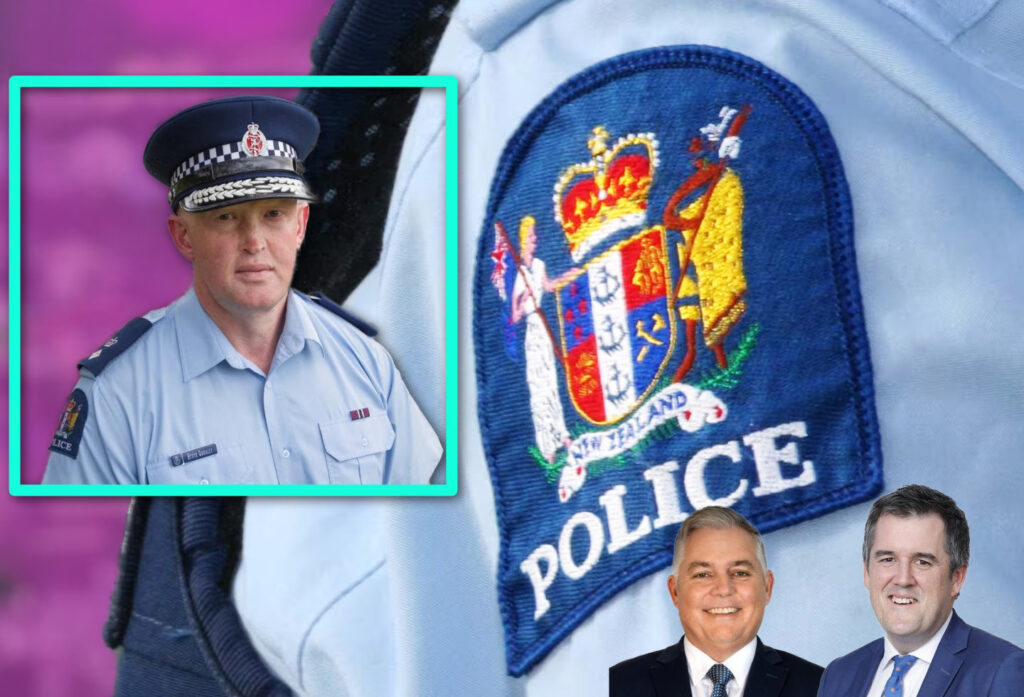
Updated 20 December, 2025 When Parliament passed the Land Transport (Drug Driving) Amendment Bill – it paved the way for randomised roadside drug testing where oral fluid drug testing can legally take place on New Zealand roads. In December 2025, the New Zealand police began a DrugWipe 3S device roadside drug testing campaign, starting deployment in greater Wellington in December 2025 and due to spread to the rest of the country in 2026. Arguments against the rollout of the roadside drug testing. Click on these points below and memorise as much as you can. It may come in handy. A ‘positive’ test isn’t correlated with ‘guilty’ or ‘physical impairment’ The New Zealand police are carrying out these tests without: performing a physical sobriety test first (the point of this campaign is supposed to be to reduce accidents so why go straight to a test that has a track record of false positives?) disclosure of the device’s reliability limits disclosure of other substances capable of causing false positives confirmation of calibration, storage, or expiry mentioning the implications of positive testing Full disclosure of chemicals released by the DrugWipe 3S devices are not disclosed Before undergoing any invasive test, New Zealanders have the right to know every compound and ingredient on that test. The New Zealand Police, at this point, have not disclosed: The full list of materials and compounds used in the pad. Any chemicals, reagents, preservatives, or stabilisers present. Any biological agents, antibiotics, or antimicrobial substances contained in or applied to the pad. Any known health risks, side effects, or contraindications associated with use of the pad. Copies of safety data sheets (SDS), manufacturer specifications, or certification documents relating to the pad. Any internal Police or Ministry of Transport documentation assessing health or safety risks of the pad. Details of **health and safety procedures** followed by Police during roadside drug testing, including: Hygiene protocols for administering the test. Training provided to officers on safe handling of the pad. Procedures for managing individuals with medical conditions or vulnerabilities. Any risk assessments or occupational safety guidelines applied to officers and members of the public during testing. This test has a history of false positives and false negatives In other words… completely useless In 2015, the Securetec DrugWipe 3 S device when tested in the UK revealed that every second person tested positive in December of that year when screened with the device. Before beginning their own campaign in December 2025, New Zealand had to know about these false results. which begs the question, why are they still doing it? The manufacturer say that their tests have a 95% success rate, but even then, that would mean 1/20 people would be falsely accused of something they haven’t done. What assurances do the New Zealand Police and Minister of Transport have that similar false positives won’t happen? Who bears the cost of that? How much will all this cost? There is no absolute disclosure as to whether DNA is taken and stored after the test The New Zealand Police, at this point, have not disclosed: What happens to saliva samples sent away for analysis. Is DNA extracted and stored somewhere? (Is personal privacy being invaded) How much does this analysis process cost each time? What correlation does any result have with a driver’s impairment on New Zealand roads? Intimidation is being used by Police officers at every test site As a driver of a vehicle in New Zealand, you will know at very short notice what is about to happen before a drug or alcohol test because you will meet a lineup of at least 5 police cars and officers waving to pull you over. The message here is STOP or you will be criminalised, despite not having actually committed a crime. Therefore your stopping is one that is taking place by coercion, not genuine consensual agreement. And from there, it is up to the police officer’s discretion as to whether you are criminalised or not. They do not guarantee fair testing or a promise not to commit foul play; you are at their mercy, and their judgment will assume the tests are fully reliable. This is a scenario that will not be accepted by the public as more and more become aware of what is taking place. Criminalising and disadvantaging more New Zealanders who aren’t committing actual crimes Trust in Government continues to fall You are immediately criminalised if you refuse to take a roadside oral fluid drug test. It’s an on the spot $400 fine and 75 demerit points for simply refusing the test, which requires each individual to lick a chemically activated object and provide it saliva containing DNA. Over 50% of New Zealanders in a 2023 OECD survey declared either a Neutral or Low to no trust in the New Zealand Government, with even less supporting the coalition majority National Party (41%), which means that over half of New Zealanders potentially would be averse to following a Government mandate such as submitting to an invasive roadside drug test. This is especially so after the COVID-19 response divided the country and created individuals who now permanently distrust the Government. If someone refuses the test, they will be issued a $400 fine as well as 75 demerit points. For context, a loss of 100 demerit points means a loss of licence. This is discrimination against those who already have little or no trust in the Government, because they do not believe in the measures being applied. For context, if you accrue over 100 demerit points in any 2 year period, that is an automatic driving suspension for 3 months. With the loss of mobility as well as the added costs of a $400 fine and extra transport / babysitting / caregiving costs resulting from such a burden, what is the cost to New Zealanders affected by this? Violation of foundational New Zealand Legislation Are New Zealand Police violating human rights? By threatening fines and demerit points for non-compliance, are
Electromagnetic Radiation Poisoning
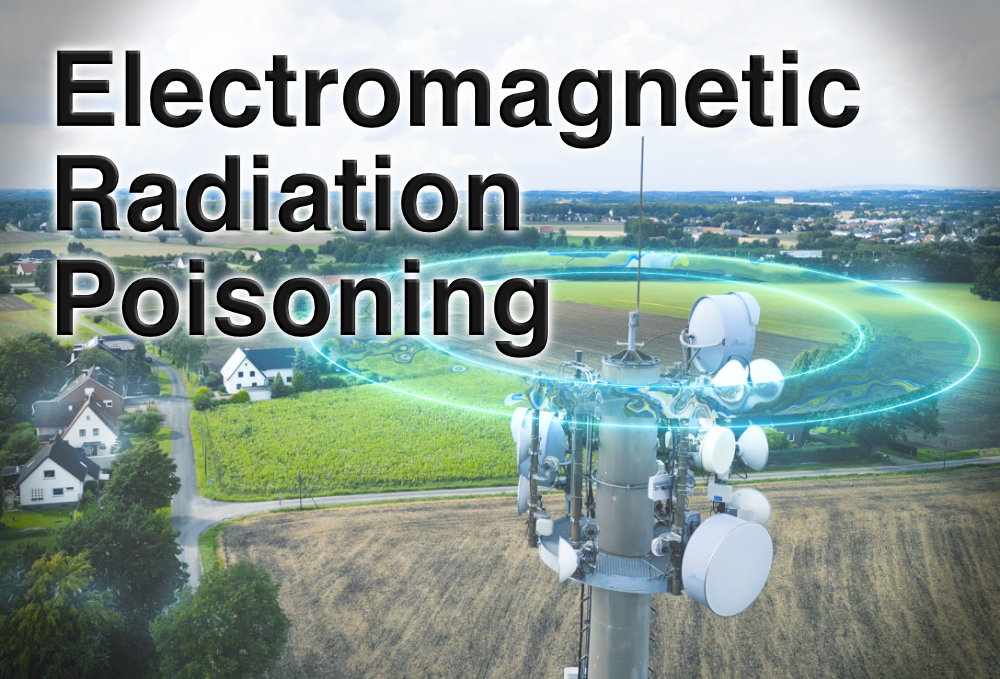
Return to Government Sponsored Harm Page LATEST UPDATE, 11 JUNE 2025 Tests conducted in the United States compared rural and non-rural areas highlighted the difference in mortality rates between rural states and metropolitan areas, with cities having higher rates of mortality. The data sets showed that there is no excess mortality in the 85+ age group in rural areas, while there is a significant increase in mortality rates in metropolitan areas. These excess deaths coincided with 5G (5th Generation technology) rollouts in city areas. Link: During the meeting, Dr. Robert Young and Anders Brunstad presented data sets that showed a correlation between excess mortality rates in the United States and 5G electromagnetic microwave radiation frequencies. No GENUINE long term safety data of effects of high EMF radiation on New Zealanders (or anyone, really): Current Situation: New Zealand’s Ministry of Health claim that “Measurements on 5G sites show that exposures are similar to or lower than those from existing cellular technologies” however other studies claim otherwise. How do we ascertain which side is correct? Conflicts of Interest 5G and succeeding technologies are heavily tied to ‘The Internet of Things’ (IOT) which is a technology infrastructure forecast to heavily feature into the government infrastructure plans of all future governments. This will allow people and situations to be analysed and managed in real time. It is the increased bandwidth and hence, radiation, that will allow surveillance technologies to monitor and even control things remotely. QUESTION: If 5G and succeeding technology is crucial to the deployment of this infrastructure, would Government institutions be completely honest about potential health effects connected to such technology? Profits to be made The amount of money to be generated from this technology by telcos and infrastructure developers like Chorus, Spark, One NZ, and their board members make it very tempting to collate data that softens any particular negative health effects that 5G and succeeding technologies may actually have. Public Consultation: 5G implementation was never consulted with the general public. It was decided upon in board rooms and back offices. This demonstrates a lack of transparency and disclosure. What should the public’s stance be?This comes down to informed consent and personal choice. Informed consent cannot, however, be made by the public because negative research findings about 5G have not been shared with the public and / or dismissed by conflicted parties (Government, telcos, media) as irrelevant. Our stance is that all information about 5G technology (positive and negative) should be tabled and public debate must happen openly in order for the parameters of informed public consent to be achievable.
NZ Government want to increase allowed Glyphosate levels

Return to Previous Page LATEST UPDATE, 15 MAY 2025 New Zealand Food Safety is considering raising the maximum residue level (MRL) for glyphosate in certain foods, particularly grains and peas. The proposal is to increase the MRL from the current default of 0.1 mg/kg to 10 mg/kg for wheat, barley, and oats, and 6 mg/kg for dry field peas, according to Farmers Weekly and Organics Aotearoa New Zealand. Glyphosate is a herbicide used in agriculture, and its presence in food can raise concerns about potential health impacts and dietary exposure, according to the Ministry for Primary Industries. Elaboration: Current Situation: New Zealand Food Safety, under the authority of the Ministry for Primary Industries (MPI) and in collaboration with Food Standards Australia New Zealand (FSANZ), is proposing to adjust the MRL for glyphosate in specific food products. Proposed Increase: The proposal aims to increase the allowable levels of glyphosate residues in wheat, barley, oats, and dry field peas. Concerns and Justification: The increase in MRL is being proposed based on the use of glyphosate as a pre-harvest desiccant on crops like wheat, oats, barley, and peas. This practice can speed up drying, but it also results in higher glyphosate residues in the final products. Public Consultation: Organics Aotearoa New Zealand is urging people to submit their opinions on the proposed changes to the MRL. Safety Assessment:New Zealand Food Safety has previously stated that it aligns with the conclusions of the Food and Agriculture Organization/World Health Organization (JMPR) reports, which have assessed glyphosate’s dietary risk as very low, according to the Ministry for Primary Industries.
Major US study confirms link between fluoride and lower IQs

Fluoride Free New Zealand says the study
confirms many children are at risk from exposure to fluoridated water